Book Appointment Now

Does Physical Therapy Treat Knee Ligament Injury?
Physical therapy is not merely supportive care; it is a primary, evidence-based, and frequently definitive treatment for different types of injuries. It has delivered remarkable results, which is why many people opt for PT as a first-line treatment. The question I’m concerned about is: Does Physical Therapy treat knee ligament injury? Let’s dive in to know the answer.
Physical therapy is a highly viable and evidence-supported form of treatment for knee ligament injuries. It serves as the primary management approach for most mild-to-moderate sprains and many complete tears. It is essential both before and after surgical reconstruction when surgery is indicated.
Understanding Knee Ligaments and Common Injuries
The anterior cruciate ligament (ACL) prevents excessive forward movement of the tibia and rotational instability. Tears are common in pivoting sports. The posterior cruciate ligament (PCL) resists backward tibial movement and often tolerates conservative care better due to its strength and blood supply. The medial collateral ligament (MCL) (inner side) and lateral collateral ligament (LCL) (outer side) provide side-to-side stability.
Symptoms typically include pain, swelling, instability, limited range of motion, and sometimes a popping sensation at injury.
Does Physical Therapy Treat Knee Ligament Injuries?

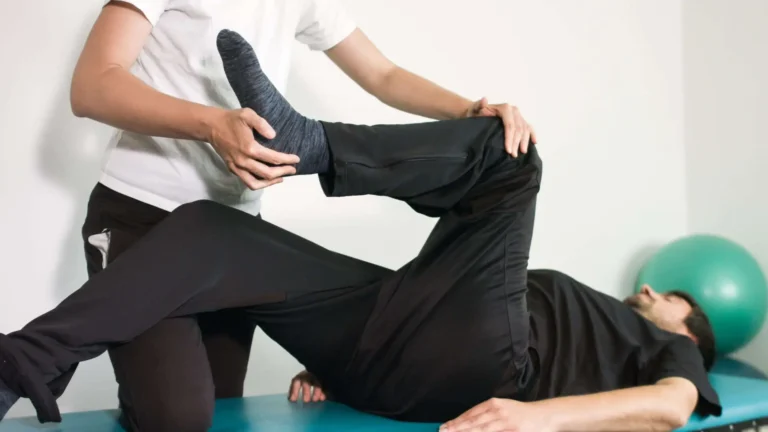
Physical therapy treats knee ligament injuries by reducing pain and swelling, restoring range of motion, strengthening supporting muscles such as quadriceps, hamstrings, glutes, and calves, improving neuromuscular control and proprioception, and guiding a safe return to activity.
Physical Therapy alone succeeds for most grade 1 and 2 injuries and many isolated MCL or PCL tears. For complete ACL tears, structured rehabilitation can produce outcomes comparable to surgery in patients with lower activity demands.
Surgery is more often recommended for high-demand athletes or those with persistent instability, multiple ligament damage, or associated meniscus or cartilage injury, yet PT remains critical in both prehabilitation and postoperative phases.
Types of Knee Ligament Injuries and PT Effectiveness
The types of Knee Ligament injuries and the effectiveness of physical therapy can be summed up under the following points:
1. MCL injuries: Most, including many grade 3 tears, heal well with bracing, protected weight-bearing, and PT focused on motion and strength. Return to activity often occurs in 4–12 weeks, depending on severity.
2. LCL injuries: Grade 1–2 respond well to PT. Complete tears, especially with posterolateral corner involvement, more frequently need surgery followed by structured rehab.
3. PCL injuries: Many partial and even some complete isolated tears are managed nonoperatively with emphasis on quadriceps strengthening to compensate for posterior laxity.
4. ACL injuries: PT is first-line for partial tears and selected complete tears. Prehab improves postoperative outcomes; post-reconstruction rehab lasts 6–12 months and is criteria-based rather than purely time-based.
5. Multiple-ligament injuries: Often require surgery, but PT is vital for protection of repairs, early motion, and functional recovery; conservative management is sometimes used when surgery is contraindicated.
How Physical Therapy Works for Knee Ligaments?
A physical therapist performs a thorough evaluation of swelling, range of motion, strength, stability, gait, and functional deficits, then designs an individualized program. Core components include:
- Pain and edema control (RICE principles, cryotherapy, compression, elevation, modalities such as electrical stimulation).
- Early protected motion to prevent stiffness while allowing ligament healing.
- Progressive strengthening (isometrics → closed-chain → open-chain exercises).
- Neuromuscular training and proprioception work to restore joint position sense and dynamic stability.
- Manual therapy, bracing or taping when indicated, and education on activity modification.
- Sport- or activity-specific progression with objective return-to-play testing.
physiovive.com
Ligaments heal through progressive loading. Muscles act as dynamic stabilizers that protect the healing or reconstructed tissue.
What to Expect During Physical Therapy and Recovery Timeline?
Sessions typically last 45–60 minutes and occur 1–3 times weekly initially, tapering as independence grows. Patients perform daily home exercises. Progress is monitored with objective measures rather than fixed calendars. Mild sprains may resolve in 2–6 weeks; moderate injuries in 6–12 weeks. Post-ACL reconstruction commonly requires 9–12 months for return to cutting sports. Full recovery depends on injury severity, age, compliance, associated damage, and activity goals.
Conclusion
Physical therapy is a cornerstone treatment for knee ligament injuries. It successfully manages the majority of sprains and many tears nonoperatively, optimizes results when surgery is needed, and equips patients with the strength, control, and knowledge to return safely to daily life and sport.
Early evaluation by a qualified physical therapist or orthopedic specialist allows for the most appropriate, individualized plan. Always consult a healthcare professional for diagnosis and personalized recommendations, as individual factors determine the optimal path. Those in Jammu can consult Dr Gaurav Vaid at Swashtya Shastra, Gandhi Nagar, Jammu, for personalised treatment. Dr Vaid has over two decades of experience and is a reputable name in the field of Physical Therapy.