Book Appointment Now

Does Physical Therapy Treat Concussions?
Concussions are very common, with millions of cases occurring every year. Many people resort to different types of treatment for the same. However, the question that people often ask is: Does physical therapy treat concussions? Understanding the importance of the question, I have decided to cover this for you. Stay tuned to know the answer.
Physical therapy effectively treats many concussion-related symptoms and can speed recovery, though it doesn’t “heal” the brain injury itself. Physical therapy does not reverse the initial mild traumatic brain injury. Instead, it addresses the common secondary problems that keep symptoms going: neck dysfunction, vestibular (balance and inner-ear) impairments, visual-motor issues, reduced exercise tolerance, and balance deficits.
Understanding Concussions and Why Symptoms Persist
A concussion is a mild traumatic brain injury caused by a blow to the head or body that temporarily disrupts brain function. Symptoms can vary widely. It can include headaches, dizziness, nausea, balance problems, sensitivity to light or noise, cognitive fog, fatigue, sleep issues, and neck pain. Most people improve within days to a few weeks.
The same forces that injure the brain often strain the cervical spine (neck) and disrupt the vestibular system and eye-movement control. These musculoskeletal and sensory problems can independently drive headaches, dizziness, and unsteadiness long after the acute brain injury has begun to settle.
How Physical Therapy Helps?

Physical therapists specialising in concussion care perform a comprehensive evaluation of neurological, orthopedic, and cardiovascular systems. Treatment is individualised and typically targets several key domains:
Cervical (Neck) Treatment
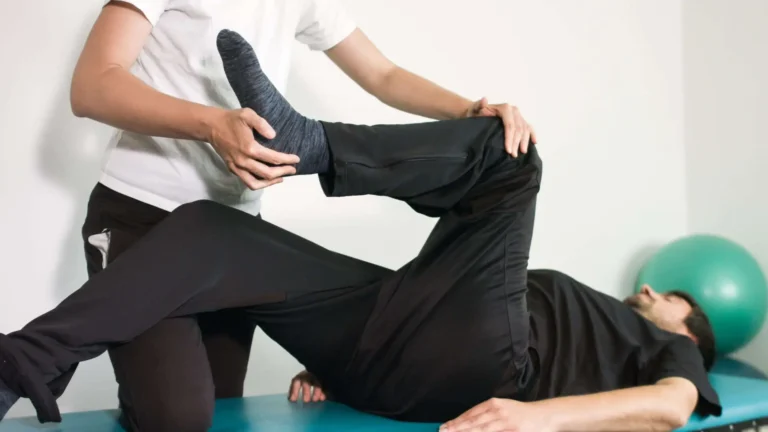
Neck pain and restricted motion are extremely common after concussion because of concurrent whiplash-type forces. Manual therapy, range-of-motion exercises, strengthening, postural training, and sensorimotor (position-sense) exercises reduce headache and dizziness of cervical origin.
Vestibular Rehabilitation
Many patients experience dizziness, vertigo, or imbalance from disruption of the inner-ear or brain connections. Vestibular physical therapy uses gaze-stabilization exercises, habituation exercises, and balance training. This approach has strong support for reducing dizziness and improving function, especially when started for symptoms lasting more than about 10 days.
- Gaze-stabilization Exercises: keeping eyes fixed on a target while moving the head
- Habituation Exercises: Gradual exposure to provocative movements
Oculomotor (Eye-Movement) Training
Problems with convergence, tracking, or vestibulo-ocular reflex can make reading, screens, and scanning difficult. Targeted exercises help retrain these systems, often in coordination with vestibular work.
Exertional and Aerobic Exercise
Sub-symptom-threshold aerobic exercise, typically starting at 50–70% of maximum heart rate and progressing, is one of the most evidence-supported interventions. It improves symptom scores, shortens recovery time, and helps athletes and active people return to higher levels of activity without major setbacks. Early initiation is safe and beneficial.
Multimodal and Functional Approaches
Therapists often combine the above with balance training, progressive return-to-activity or return-to-sport protocols, education on pacing and sleep, and activity modification. For athletes, treatment may include sport-specific drills once symptoms allow.
When to Seek Physical Therapy?
Most guidelines and clinicians recommend evaluation by a concussion-trained physical therapist if symptoms, especially headache, neck pain, dizziness, or balance problems persist beyond 7–14 days. You can seek physical therapy sooner if symptoms are severe or interfering with daily function. Athletes often benefit from early involvement to guide safe return-to-play progression. A physician typically provides the diagnosis and medical clearance; the physical therapist then manages the functional and movement-related impairments.
What to Expect in Treatment?
Sessions begin with a detailed history and testing of balance, neck mobility, eye movements, vestibular function, and exercise tolerance. A personalized plan follows, often including a home exercise program. Frequency might start at 1–2 times per week and taper as progress occurs. Many patients notice meaningful improvement within weeks, though timelines vary with age, symptom severity, previous concussions, and adherence. Education is a core component; patients learn how to monitor symptoms, pace activity, and recognize red flags.
Conclusion
So, it has come to light that physical therapy is a cornerstone of modern concussion care. By treating the neck, vestibular system, visual-motor control, and exercise intolerance that frequently accompany the injury, PT reduces symptoms, restores function, and shortens recovery for many people.
If you or someone you know is dealing with lingering concussion symptoms, asking about a referral to a physical therapist experienced in concussion and vestibular rehabilitation; refer them to Dr Gaurav Vaid, a physiotherapist of international repute with over two decades of experience. Visit Swasthya Shastra in Gandi Nagar, Jammu, for personalised and tailored treatment.
For further queries, please reach out to Dr. Gaurav Vaid or Swasthya Shastra.