Book Appointment Now
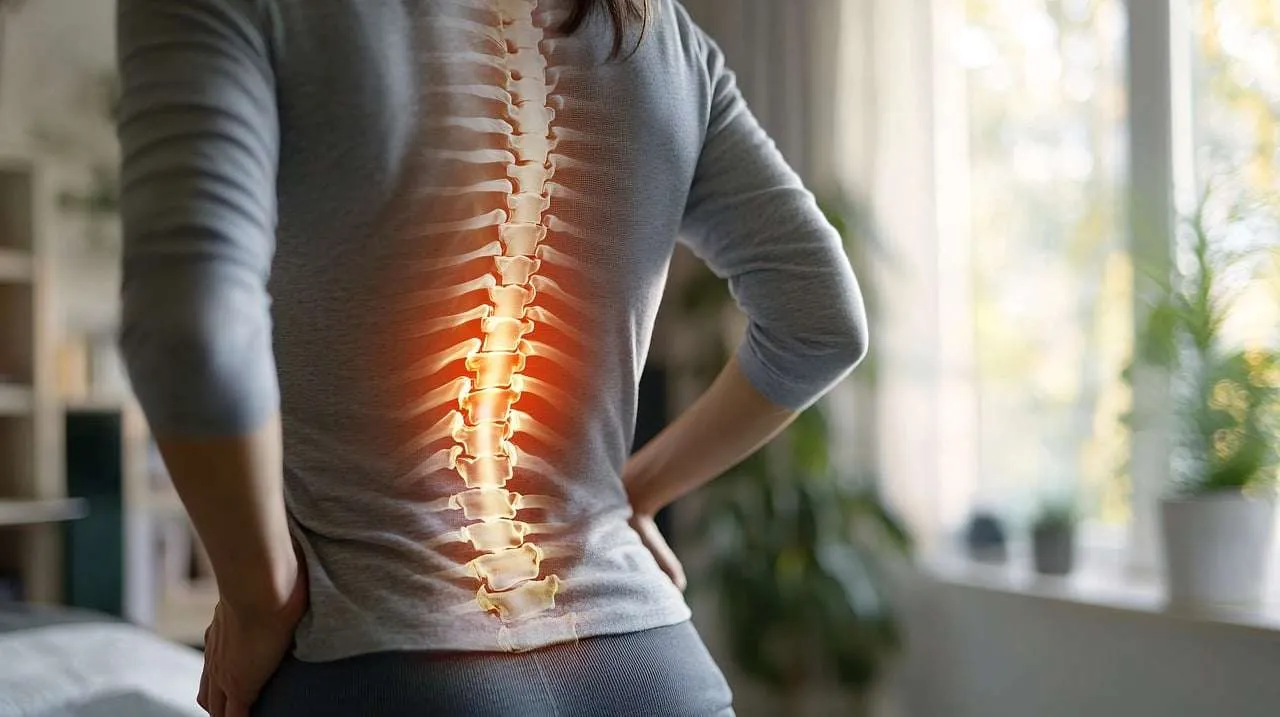
How Lifestyle Factors (Sleeping, Sitting, Lifting) Impact Spinal Health
Your everyday habits, how you sleep, how long you sit, and how you lift are some of the biggest controllable factors affecting the long-term health of your spine. Your spine is not a fragile structure doomed to wear out with age; it is a resilient, living system that reflects the cumulative effects of how you treat it every single day.
Modern life has quietly become one of the greatest risk factors for spinal degeneration. However, a physiotherapist will help you address the issue. A good physiotherapist does not just give you generic exercises. They perform a root-cause analysis and build an individualised plan. If you are looking for one such physiotherapist, you can visit Swasthya Shastra, where Dr Gaurav Vaid will guide you through.
How Daily Lifestyle Habits Sleep, Sitting & Lifting Determine Long-Term Spinal Health?
Daily habits of sleeping, sitting, and lifting account for the majority of mechanical stress your spine experiences over a lifetime. Here is how these factors can impact your spinal health:
1. Sleep
Sleep isn’t just rest; it’s the only time your spine is completely unloaded and able to repair itself. Here are some of the important things that you must know about sleeping:
1. Spinal Alignment During Sleep: The spine has natural curves called cervical lordosis, thoracic kyphosis, and lumbar lordosis. The goal at night is to maintain those curves so discs and facet joints are not loaded asymmetrically for 6-9 hours.
2. Best Sleeping Positions: Here are the best sleeping positions that you must follow:
- Back sleeping with a small pillow under the knees. It preserves lumbar lordosis and reduces disc pressure by up to 50-70% compared with sitting or standing.
- Side sleeping with a pillow between the knees and a supportive neck pillow. Sleeping in this position keeps the pelvis and spine neutral.
Important: Stomach sleeping is the worst sleeping position. It forces lumbar hyperextension and cervical rotation, increasing facet joint and disc stress. Long-time stomach sleepers have a higher rate of low back pain and degenerative changes.
3. Mattress and Pillow: The choice and selection of a mattress and a pillow have a lot to do with proper sleep. Medium-firm mattresses reduce low back pain better than very firm or very soft ones. The pillow should keep the cervical spine in neutral alignment, the ear in line with the shoulder.
2. Prolonged Sitting
Prolonged sitting is also one of the lifestyle factors that can have an adverse impact on your spinal health. Here is how it affects:
1. Intradiscal Pressure: Your posture matters more than you think. Sitting increases lumbar disc pressure by 40% compared with standing and by 300% compared with lying down. Slouched sitting is even worse; the pressure can exceed 200kPa, approaching levels seen in heavy lifting.
2. Flexion stress and creep: Prolonged lumbar flexion causes posterior disc creep, such as slow outward bulging of the annulus and loss of disc height. This is why many people are at their tallest in the morning and lose 1-2 cm by evening.
3. Muscle deactivation and imbalances: Glutes and deep core shut down after 20-30 minutes of sitting, forcing superficial erector spinae and hip flexor to overwork, leading to anterior pelvic tilt and hyperlordosis over time.
4. Practical Fixes: Here are some of the practical fixes that you must try:
- 20-30 minutes sit/stand cycles. Ideally, 2-4 minutes of standing and walking every 30 minutes is recommended.
- Lumbar support or correct chair set up. It should be at a 90-100 degree hip angle and slight lumbar lordosis.
- Use standing desks and anti-fatigue mats.
3. Lifting and Load Handling
Most bad bucks are not from one dramatic injury but from thousands of poorly managed small loads and positions day after day.
1. Key Biomechanical Principles: According to this principle, the further the load is from the spine, the moment arm increases exponentially: Lifting 10 kg at 50 cm from the spine creates 5 times more compressive force than holding it close to the body.
2. Stoop vs Squat Debate:
Pure stoop involving bent back and straight knees leads to high shear and flexion moment on lumbar discs. Repeated stooping is linked to higher disc prolapse risk.
Pure squat involving straight back and bent knees leads to sifting of load to hips and knees, but places very high compressive forces on knee joints and requires strong quads.
Core bracing is quite helpful. Creating intra-abdominal pressure stiffens the spine and can reduce lumbar compressive forces by 20-40% and shear by up to 60%.
Also, read Posture Correction Tips for Students & Young Professionals
Daily Check Up for Spinal Health
Here is the list of check-ups that can be a great help for your spinal health. Doing these check-ups consistently for years, you will lower your risk of disc degeneration, stenosis, and chronic pain:
1. Sleep 7-9 hours in a back or side position on a medium-firm mattress.
2. Limit uninterrupted sitting to less than 30 minutes. Stand/ walk regularly.
3. When you must lift: hip back, slight knee bend, brace core, and keep the load close.
4. Include daily spinal hygiene. It includes cat camel mobility, the McGill Big 3, which includes curl up, side plank, and bird dog. Besides, don’t avoid short walks.
5. Maintain a healthy body weight. Remember that every extra 10 kg increases spinal loading.
Conclusion
The health of your spine in ten, twenty, or fifty years will not be decided by genetics or the occasional gym sessions; it will be the direct result of how you sleep tonight, how you sit tomorrow, and how you lift next week, repeated thousands of times. To master all this with utmost precision, you need a consultation with a physiotherapist who will guide you through.
Swasthya Shastra at Gandhi Nagar is a physiotherapy clinic where, under the able guidance of Dr Gaurav Vaid, an experienced team of physios will help you deal with these issues. You can visit the clinic for personalised treatment.
For further queries, please reach out to Dr. Gaurav Vaid or Swasthya Shastra.